

What if two of the greatest minds in physics could change the outcome of World War II with a single conversation? The cast of the Copenhagen test is not just a list of names—it’s a story of genius, rivalry, and the moral dilemmas that shaped the modern world. In September 1941, in Nazi-occupied Denmark, Niels Bohr and Werner Heisenberg met in secret. Their discussion, shrouded in mystery, would become the centerpiece of both scientific revolution and dramatic retelling. The “Copenhagen Test” refers to both the Copenhagen Interpretation of quantum mechanics—a radical new way of understanding the universe—and the high-stakes moral “test” faced by these scientists as their discoveries threatened to change the course of history.
This cast includes not only the real-life physicists who built the foundations of quantum theory but also the actors and playwrights who brought their story to the stage and screen. From the laboratories of 1920s Europe to the bright lights of Broadway and the BBC, the cast of the Copenhagen test has left an indelible mark on science, art, and the very way humanity thinks about reality. Their ideas didn’t just change physics—they changed the world.
The Core Scientific Cast: Founding Fathers of Quantum Theory
Niels Bohr — The “Pope” of Physics
Niels Bohr was born in Copenhagen in 1885, a city that would later become synonymous with quantum theory. By 1922, he had already won the Nobel Prize in Physics for his groundbreaking work on atomic structure. But Bohr’s influence went far beyond equations and experiments. He founded the Copenhagen Institute, which quickly became a magnet for the brightest young physicists from around the globe. This “Copenhagen Spirit” was more than just camaraderie—it was a culture of open debate, relentless questioning, and creative thinking.
Bohr’s most famous contribution is the principle of complementarity. In the strange world of quantum mechanics, particles like electrons and photons can behave as both waves and particles, but never both at the same time. Which aspect is revealed depends entirely on how the experiment is set up. Bohr argued that the act of measurement itself brings quantum possibilities into reality. This was a radical departure from classical physics, where the universe was thought to exist independently of observation.
His philosophical insight and gentle authority earned him the nickname “the Pope of physics.” Bohr was a mentor to a generation of physicists, guiding them through the bewildering new landscape of quantum theory. He believed that science was not just about finding answers, but about asking the right questions—a lesson that still resonates today.
Werner Heisenberg — The Protégé and the Uncertainty Principle
Werner Heisenberg, born in Germany in 1901, was Bohr’s most brilliant protégé. Heisenberg’s name is forever linked to the uncertainty principle, a concept that shattered the old, deterministic view of the universe. According to Heisenberg, it is impossible to know both the exact position and the exact momentum of a particle at the same time. The more precisely one is known, the less precisely the other can be determined. This wasn’t just a limitation of measurement—it was a fundamental property of nature itself.
Heisenberg’s uncertainty principle forced physicists to accept that there are limits to what can be known. The universe, at its most basic level, is governed by probabilities, not certainties. This was a hard pill to swallow for many, including Albert Einstein, who famously objected, “God does not play dice.”
During World War II, Heisenberg became a controversial figure. He led Germany’s nuclear research program, raising the haunting question: was he trying to build an atomic bomb for the Nazis, or was he secretly sabotaging the effort? Historians still debate his true intentions, making Heisenberg one of the most enigmatic members of the cast of the Copenhagen test.
Wolfgang Pauli — The Conscience of Physics
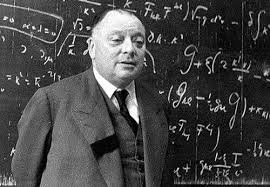
Wolfgang Pauli, born in Vienna in 1900, was known for his razor-sharp intellect and even sharper tongue. He contributed the Pauli exclusion principle, which explains why matter takes up space and why atoms don’t collapse in on themselves. Pauli’s principle is the reason the world has structure—from the stability of atoms to the solidity of everyday objects.
Pauli was called “the conscience of physics” because he demanded clarity, rigor, and honesty from his colleagues. He was never afraid to challenge even the most celebrated ideas, pushing his peers to think more deeply about the meaning of quantum mechanics. Pauli’s relentless pursuit of truth helped refine the Copenhagen Interpretation, ensuring that it was not just mathematically sound but also philosophically robust.
Max Born — The Statistical Genius
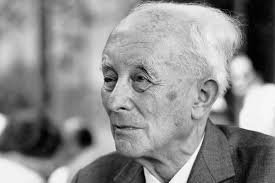
Max Born, a German physicist born in 1882, brought a new level of mathematical sophistication to quantum theory. He proposed what is now known as the Born rule: the wavefunction, a central concept in quantum mechanics, doesn’t tell us exactly where a particle is. Instead, it gives the probability of finding the particle in a particular place. This statistical interpretation was a turning point, making sense of the strange, probabilistic world revealed by quantum experiments.
Born’s insight is at the heart of the Copenhagen Interpretation and underpins all of modern quantum physics. Without his work, the probabilistic nature of quantum mechanics would remain a mystery, and technologies like quantum computing would be impossible.
Margrethe Bohr — The Observer in Real Life
Margrethe Bohr, Niels Bohr’s wife, was not a physicist by training, but her role was indispensable. She acted as a sounding board for Niels and his colleagues, helping them clarify their ideas and communicate them to the outside world. Margrethe’s questions and insights often forced the scientists to explain their theories in plain language, making the abstract more concrete.
In many ways, Margrethe embodied the “observer” concept at the heart of the Copenhagen Interpretation. Her presence reminded the physicists that science is not just about equations and experiments, but about people, communication, and understanding.
The Dramatic Cast: Michael Frayn’s Play Copenhagen
Overview of the Play
In 1998, British playwright Michael Frayn brought the story of the Copenhagen test to the stage. His play, simply titled Copenhagen, dramatizes the mysterious 1941 meeting between Bohr, Heisenberg, and Margrethe. The play doesn’t just recount historical events—it dives deep into the moral and emotional stakes of the encounter, exploring memory, motivation, and the limits of knowledge.
Copenhagen was an immediate critical success. It won the 2000 Tony Award for Best Play on Broadway, and critics hailed it as a masterpiece of intellectual drama. The New York Times called it “the most invigorating and ingenious play of ideas in many a year. An electrifying work of art.” The London Times described it as “an intellectual and theatrical tour de force.” The Guardian simply called it “gripping. A brilliant play.”
Frayn’s script is a tour de force of dialogue and ambiguity. The characters revisit the events of 1941 from multiple perspectives, never settling on a single version of the truth. The play’s structure mirrors the uncertainty principle itself—every answer leads to more questions.
Character Profiles in the Play
Bohr is portrayed as the wise elder, burdened by the ethical responsibilities of scientific discovery. He struggles to understand Heisenberg’s motives and to protect his family and country in a time of war.
Heisenberg is brilliant but deliberately ambiguous. Did he come to warn Bohr about the Nazi bomb project, or to seek advice on how to build it? The play never resolves this question, leaving the audience to grapple with the same uncertainty that haunted the real-life figures.
Margrethe serves as the audience’s guide through the science and the drama. She asks the questions that make the complex ideas accessible and reminds the men—and the audience—of the human consequences of their work. Her presence grounds the play, providing an emotional anchor amid the intellectual storm.
Notable Stage Casts
The original National Theatre production in London featured David Burke as Bohr, Sara Kestelman as Margrethe, and Matthew Marsh as Heisenberg, under the direction of Michael Blakemore. The play ran for over 300 performances, captivating audiences with its blend of science and suspense.
On Broadway, the Royale Theatre production starred Philip Bosco as Bohr, Michael Cumpsty as Heisenberg, and Blair Brown as Margrethe. This production, also directed by Blakemore, ran for 326 performances and won the Tony Award for Best Play in 2000. Blair Brown’s portrayal of Margrethe earned her the Tony for Best Featured Actress in a Play.
Each production brought new depth to the cast of the Copenhagen test, showing how history and science can become gripping drama. The actors’ performances made the abstract personal, turning equations and theories into matters of life and death.
The On-Screen Cast: Film and Television
The 2002 BBC Film
The story of the Copenhagen test reached an even wider audience with the 2002 BBC film adaptation, directed by Howard Davies. This three-character drama focused tightly on the 1941 meeting, bringing the tension and ambiguity of the play to the screen.
Stephen Rea played Niels Bohr, capturing the physicist’s quiet authority and inner conflict. Critics praised Rea’s “fine work,” noting his ability to convey both the intellectual and emotional weight of the character.
Daniel Craig, in a role that predated his fame as James Bond, portrayed Werner Heisenberg. Craig brought a “ceaseless, astute” energy to the role, embodying the intensity and ambiguity that made Heisenberg such a fascinating figure. Viewers were left questioning Heisenberg’s true motives, just as the real Bohr had been.
Francesca Annis played Margrethe Bohr, providing the emotional heart of the film. Critics highlighted her strong, grounding presence, which anchored the scientific debates in real human concerns.
The film received glowing reviews for its acting and intellectual depth. One critic wrote, “A distinguished cast turns in gripping performances, substantially helped by the constant reiteration on the soundtrack of one of Schubert’s most haunting slow movements.” Another declared, “If you want to experience brilliant acting, sumptuous locales and an exchange of provoking ideas, then I recommend Copenhagen.” Despite the praise, the film attracted only about 18,000 viewers on its BBC4 premiere—a testament to its niche but devoted audience.
The Modern Documentary Cast
In recent years, documentaries have featured physicists and historians as a new generation of the cast of the Copenhagen test. These experts help translate the science and history for today’s audiences, connecting the discoveries of the 1920s and 1940s to the challenges and opportunities of the 21st century. By keeping the moral and scientific debates alive, they ensure that the story of the Copenhagen test remains relevant and accessible.
The Science Behind the Copenhagen Test
Wave-Particle Duality
At the heart of the Copenhagen Interpretation is the idea of wave-particle duality. Quantum objects like electrons and photons can behave as both waves and particles, depending on how they are measured. Bohr’s principle of complementarity states that these two behaviors are mutually exclusive—you can only observe one at a time.
The classic demonstration of this is the double-slit experiment. When electrons are fired at a barrier with two slits, they create an interference pattern on a screen behind the barrier, just like waves. But if a detector is used to observe which slit each electron passes through, the interference pattern disappears, and the electrons behave like particles. The act of observation changes the outcome.
The Collapse of the Wavefunction
Before measurement, a quantum system exists in a superposition—a blend of all possible states simultaneously. When a measurement is made, the wavefunction “collapses” to one definite outcome. This collapse isn’t a physical explosion; it’s a change in our knowledge of the system.
Max Born’s rule tells us the probability of each possible outcome. For example, the wavefunction might say there’s a 60% chance of finding an electron in one place and a 40% chance in another. Once the measurement is made, the electron is found in one place, and the other possibility vanishes.
The Role of the Observer
In the Copenhagen Interpretation, the observer is crucial. The interaction with a measuring device—something from the classical world—is what brings one quantum possibility into reality. This doesn’t mean that human consciousness causes the collapse, but that the measurement apparatus matters.
In this sense, every person who studies quantum mechanics becomes part of the cast of the Copenhagen test. The observer is not just a passive spectator but an active participant in the unfolding of reality.
Probability Over Certainty
The Copenhagen Interpretation says that quantum mechanics is fundamentally probabilistic. We can only predict the likelihood of different outcomes, never a guaranteed result. This was a radical departure from classical physics, where the universe was thought to be deterministic.
Einstein famously rejected this idea, declaring, “God does not play dice.” But the experiments have consistently supported the Copenhagen view: at the quantum level, nature is governed by chance.
The 1927 Solvay Conference: Where the Cast First Assembled
The 1927 Solvay Conference in Brussels was a turning point for quantum mechanics. It brought together the greatest minds of the era—Bohr, Heisenberg, Born, Pauli, Schrödinger, and Einstein—to debate the meaning of the new theory. The conference is famous for the heated debates between Bohr and Einstein over the probabilistic nature of quantum mechanics.
Einstein challenged the Copenhagen Interpretation, arguing that the universe must be fundamentally deterministic. Bohr, however, successfully defended the new view, insisting that probability and uncertainty were built into the fabric of reality.
The famous photograph of the attendees is often called “the most intelligent picture ever taken.” It shows 29 of the world’s greatest scientists gathered in one room, their faces reflecting the excitement and tension of a scientific revolution.
The conference gave the Copenhagen Interpretation its momentum and cemented the cast’s place in history. The debates that began in Brussels continue to shape physics today.
The 1941 Meeting: The Ultimate Copenhagen Test
What Happened in Occupied Denmark?
In September 1941, with Europe engulfed in war, Werner Heisenberg traveled to Nazi-occupied Copenhagen to visit his old mentor, Niels Bohr. The details of their conversation remain one of history’s greatest unsolved mysteries.
Bohr’s account and Heisenberg’s account differ significantly. Some historians believe Heisenberg sought Bohr’s advice on nuclear physics, perhaps hoping to slow the German bomb project. Others believe he was trying to warn Bohr about the Nazi effort. Letters Bohr drafted (but never sent) to Heisenberg suggest that Bohr felt Heisenberg had come to gather information, not to warn him.
The truth may never be fully known. What is clear is that the meeting was fraught with tension, suspicion, and the weight of unimaginable consequences.
The Atomic Bomb Race
At the time, both Germany and the Allies were racing to build an atomic weapon. Heisenberg led the German nuclear research program, known as the Uranverein or Uranium Club. Bohr, after escaping to Sweden in 1943, made his way to the United States, where he contributed to the Manhattan Project.
The central question remains: was Heisenberg deliberately sabotaging the Nazi bomb effort, or did he simply fail to solve the technical and mathematical challenges? Some historians argue that he underestimated the critical mass needed for a bomb; others believe he was heroically slowing the program from within.
The Moral Test
The 1941 meeting is often seen as the ultimate Copenhagen test—not of physics, but of human ethics. It forced these scientists to confront the real-world consequences of their discoveries. What is the moral responsibility of a scientist whose knowledge can destroy civilizations?
Michael Frayn’s play dramatizes this question without ever answering it definitively, mirroring the uncertainty principle itself. The cast of the Copenhagen test was not just tested in the laboratory, but in the crucible of history.
The Legacy of the Copenhagen Cast
The Door to Quantum Computing
The principles developed by Bohr, Heisenberg, Born, and Pauli—superposition, entanglement, and probabilistic outcomes—are the foundation of modern quantum computing. Quantum computers exploit superposition to process multiple possibilities simultaneously, something classical computers cannot do.
Without the insights of the Copenhagen cast, today’s quantum computing revolution would not exist. In 2026, major tech companies and governments are investing billions in quantum computing, hoping to unlock new frontiers in science, medicine, and technology.
Copenhagen vs. Many Worlds — The Rival Cast
The Copenhagen Interpretation is not the only contender for explaining quantum reality. In the 1950s, American physicist Hugh Everett III proposed the Many Worlds Interpretation: every quantum event causes the universe to branch, with all possible outcomes occurring simultaneously in parallel universes.
Erwin Schrödinger and Albert Einstein also challenged the Copenhagen view—Schrödinger with his famous “cat” thought experiment, Einstein with his demand for a more deterministic universe. The debate continues today, with physicists divided over which interpretation best describes reality.
The rival “cast”—Everett, Schrödinger, Einstein—ensures the Copenhagen cast remains relevant and contested. The story of quantum mechanics is still being written.
Key Takeaways
- The cast of the Copenhagen test includes legendary scientists: Bohr, Heisenberg, Pauli, Born, and Margrethe Bohr—real people whose ideas shaped modern physics.
- The Copenhagen Interpretation introduced wave-particle duality, wavefunction collapse, and the observer effect.
- The 1927 Solvay Conference was the historic gathering where these ideas were debated and refined.
- The 1941 meeting between Bohr and Heisenberg in Nazi-occupied Denmark remains one of history’s great unsolved mysteries—a moral “test” for science itself.
- The legacy lives on in quantum computing and ongoing interpretive debates.
- Both the stage play and the 2002 BBC film brought these stories to wide audiences, with acclaimed performances from Philip Bosco, Michael Cumpsty, Blair Brown, Stephen Rea, Daniel Craig, and Francesca Annis.
Conclusion
The cast of the Copenhagen test remains as relevant today as ever. Their ideas underpin the technologies that drive the modern world, from computers to medical imaging to the emerging field of quantum computing. But their story is ultimately a human one—about curiosity, responsibility, loyalty, and the search for truth. Whether as real scientists, stage characters, or film portrayals, this cast changed the world. Their debates and dilemmas continue to inspire, challenge, and provoke new generations to ask: what does it mean to know, and what does it mean to choose?
FAQ
Who is in the cast of the Copenhagen movie?
The 2002 BBC film features Stephen Rea as Niels Bohr, Daniel Craig as Werner Heisenberg, and Francesca Annis as Margrethe Bohr, directed by Howard Davies.
What is the Copenhagen Interpretation in simple terms?
It’s the idea that quantum particles exist in multiple possible states at once until they are measured, and that the act of measurement determines which single outcome becomes real.
Did Daniel Craig play Heisenberg?
Yes. Before he became famous as James Bond, Daniel Craig played Werner Heisenberg in the 2002 BBC film adaptation of Michael Frayn’s play Copenhagen.
Who were the real scientists in the cast of the Copenhagen test?
The core scientific cast includes Niels Bohr, Werner Heisenberg, Wolfgang Pauli, Max Born, and Margrethe Bohr—the key figures who developed and debated the Copenhagen Interpretation of quantum mechanics.
SEO Meta Description: Discover the cast of the Copenhagen test—real physicists like Bohr and Heisenberg and cast-of-the-copenhagen-test
